


Royalty Allocation Compliance.
Royalty Allocation Compliance


4
1. Introduction
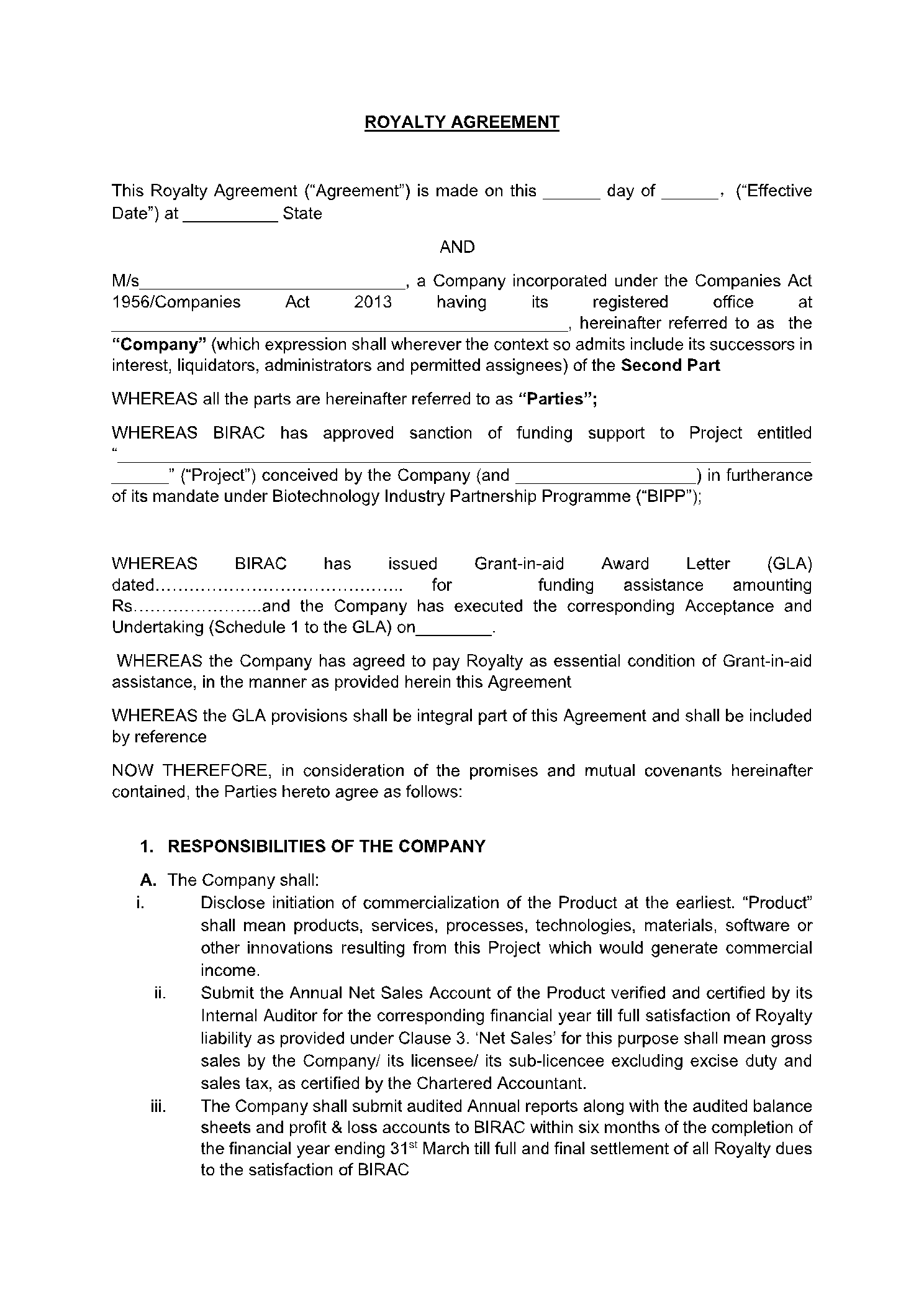
Royalty Allocation Compliance refers to the legal, regulatory, and contractual framework governing the proper calculation, reporting, and payment of royalties due to creators, licensees, or stakeholders. It ensures that intellectual property rights holders, inventors, authors, and other beneficiaries receive their entitled share of revenue in accordance with contractual and statutory obligations.
Proper compliance reduces legal disputes, maintains trust in licensing arrangements, and aligns with corporate governance standards.
2. Meaning and Scope
- Royalty: Payment made to an IP owner, creator, or licensor in exchange for the right to use, sell, or exploit intellectual property.
- Compliance: Adherence to legal obligations, contractual terms, and regulatory reporting requirements regarding royalty allocation.
Scope includes:
- Patent licensing
- Copyrights (music, software, literature)
- Trademarks and brand licensing
- Franchise and franchisee arrangements
3. Core Compliance Requirements
(a) Contractual Adherence
- Payment terms, percentage rates, and schedules must be respected
- Adjustments for deductions, advances, or minimum guarantees
(b) Accurate Calculation and Reporting
- Royalty calculations based on sales, revenue, or usage
- Transparent reporting to licensors or IP owners
(c) Timely Payment
- Ensuring payments are made according to agreed schedules
(d) Recordkeeping and Audit
- Maintaining detailed records of revenue, licenses, and deductions
- Compliance with auditing rights of licensors
(e) Regulatory Compliance
- Tax obligations (withholding taxes, VAT/GST)
- Financial disclosure for listed entities
(f) Dispute Resolution Mechanisms
- Handling disagreements on allocation or calculation
- Arbitration or legal remedies as per contract
4. Legal and Regulatory Framework
- Intellectual Property Laws: Copyright, patent, and trademark statutes
- Securities and Corporate Law: Disclosure of revenue streams in financial statements
- Tax Law: Reporting royalties for tax compliance
- International Treaties: Berne Convention, TRIPS for cross-border royalties
- Contract Law: Governing terms of licensing agreements
5. Risks Addressed by Royalty Allocation Compliance
- Misappropriation of IP revenue
- Breach of licensing agreements
- Tax penalties or audits
- Reputational harm
- Litigation with IP owners
6. Key Case Laws (At Least 6)
(1) BMG Rights Management v. Cox Communications (2016)
- Copyright infringement and royalty obligations
- Principle: Licensees must pay royalties consistent with IP usage; compliance ensures enforcement of rights.
(2) Capitol Records, LLC v. ReDigi Inc. (2013)
- Digital music resale royalty compliance
- Principle: Compliance with copyright licensing terms is mandatory, even in novel business models.
(3) Oracle America, Inc. v. Google LLC (2018)
- Software licensing royalties dispute
- Principle: Proper allocation of royalties depends on contract interpretation and fair valuation of IP use.
(4) Sony Music Entertainment v. Tenenbaum (2011)
- Peer-to-peer infringement and statutory royalties
- Principle: Royalty compliance protects creators and enforces statutory entitlements.
(5) Warner Music Group v. TuneIn, Inc. (2016)
- Streaming royalties calculation
- Principle: Accurate reporting and allocation in complex revenue streams is required to avoid liability.
(6) In re Napster, Inc. Copyright Litigation (2001)
- File-sharing platform liability
- Principle: Failure to comply with royalty obligations can result in substantial statutory damages.
(7) ASCAP v. Pandora Media, Inc. (2014)
- Performance rights and royalty settlements
- Principle: Regulatory compliance ensures fair distribution to rights holders.
7. Doctrinal Principles Emerging from Case Law
(i) Accuracy and Transparency
- Royalty calculations must be precise and auditable
(ii) Timeliness
- Delays in payments or reporting breach contractual and legal duties
(iii) Contractual Fidelity
- Licensing agreements govern entitlements; courts uphold contract terms
(iv) Statutory Compliance
- Applicable IP and tax laws cannot be bypassed
(v) Risk Management
- Proper allocation prevents disputes, penalties, and reputational damage
8. Governance Framework for Royalty Compliance
| Level | Responsibility |
|---|---|
| Board/Management | Oversight of licensing agreements and royalty policies |
| Finance & Accounting | Accurate calculation and reporting |
| Legal/Compliance Team | Ensure regulatory and contractual compliance |
| External Auditors | Independent verification of royalty allocation |
| IP/Licensing Team | Monitor usage and enforce licensing terms |
9. Best Practices
- Maintain detailed sales and revenue tracking systems
- Conduct periodic royalty audits
- Use standardized reporting templates for licensors
- Ensure contractual clarity on rates, schedules, and deductions
- Comply with tax and international IP regulations
- Implement dispute resolution procedures in licensing contracts
10. Challenges
- Complex multi-jurisdictional licensing agreements
- Evolving digital revenue streams (streaming, cloud, SaaS)
- Tracking usage across multiple platforms
- Reconciling contractual vs statutory royalty obligations
11. Analytical Perspective
Royalty allocation compliance integrates:
Financial accuracy + Contractual adherence + Regulatory compliance
It ensures:
- Protects IP owners
- Reduces litigation risk
- Enhances corporate governance
12. Conclusion
Royalty Allocation Compliance is critical in modern corporate and IP governance. It ensures:
- Fair and accurate distribution of IP revenue
- Adherence to legal and contractual obligations
- Protection against regulatory penalties and disputes
The guiding principle is:
Transparent, timely, and accurate royalty management upholds legal, financial, and ethical responsibilities.
RELATED Blog

comments