



Organizer And Incorporator Duties
Organizer and Incorporator Duties
4
1. Meaning and Concept
Organizers and Incorporators are the individuals responsible for forming a company and ensuring that all legal requirements for incorporation are fulfilled.
- Incorporators: Persons who sign and file incorporation documents (e.g., Memorandum of Association).
- Organizers (Promoters): Persons who undertake preliminary steps to bring the company into existence and set it in motion.
Under Indian company law, these roles broadly fall within the concept of “promoters” under the Companies Act, 2013.
2. Legal Status
- Before incorporation, the company does not exist as a legal entity.
- Therefore, organizers/promoters act in a fiduciary capacity toward the future company.
- They may incur personal liability for pre-incorporation contracts.
3. Core Duties of Organizers and Incorporators
(a) Fiduciary Duty
- Must act in good faith and in the best interest of the proposed company.
- Cannot make secret profits.
(b) Duty of Full Disclosure
- Must disclose:
- Personal interests in transactions
- Profits made during promotion
(c) Duty to Avoid Conflict of Interest
- Cannot place themselves in a position where personal interest conflicts with company interest.
(d) Duty of Due Care and Skill
- Must exercise reasonable care in forming the company and entering transactions.
(e) Duty Regarding Pre-Incorporation Contracts
- Contracts entered before incorporation must:
- Be disclosed
- Be adopted by the company after incorporation
(f) Duty to Ensure Legal Compliance
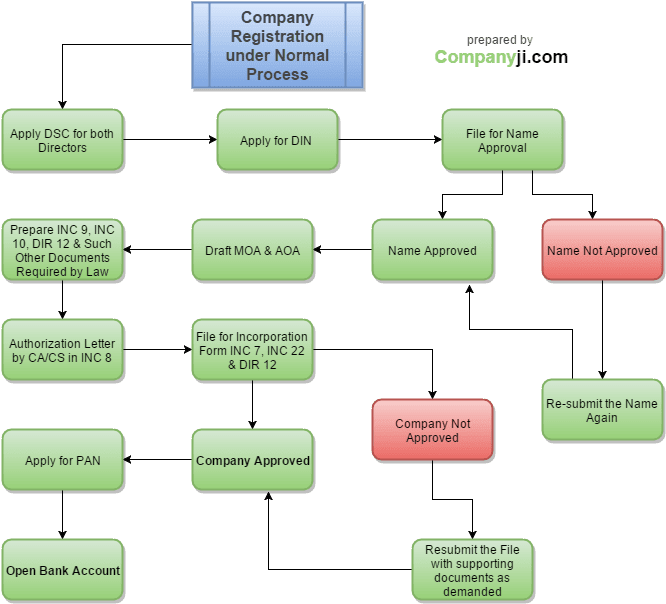
- Filing correct documents
- Adhering to statutory requirements
4. Pre-Incorporation Contracts
- Since the company is not yet formed, it cannot be bound by contracts.
- Promoters may be:
- Personally liable
- Released only if novation occurs after incorporation
5. Liabilities of Organizers/Incorporators
(a) Civil Liability
- For breach of fiduciary duty
- For non-disclosure or misrepresentation
(b) Criminal Liability
- For fraud, misstatements in prospectus
(c) Personal Liability
- For pre-incorporation contracts
6. Remedies Against Promoters
- Rescission of contract
- Recovery of secret profits
- Damages for breach of duty
- Refusal to ratify contracts
7. Case Laws on Organizer and Incorporator Duties
1. Erlanger v New Sombrero Phosphate Co (1878)
- Promoters sold property to company at inflated price without disclosure.
- Court held promoters are fiduciaries and must disclose profits.
- Company entitled to rescind contract.
2. Kelner v Baxter (1866)
- Promoters entered contract before incorporation.
- Court held promoters are personally liable.
- Company cannot ratify pre-incorporation contracts.
3. Natal Land & Colonization Co v Pauline Colliery Syndicate (1904)
- Recognized duty of full disclosure by promoters.
- Failure leads to liability.
4. Gluckstein v Barnes (1900)
- Promoters made secret profits through indirect transactions.
- Court ordered recovery of undisclosed profits.
5. Re Leeds & Hanley Theatres of Varieties Ltd (1902)
- Promoters received undisclosed commission.
- Held liable for breach of fiduciary duty.
6. Weavers Mills Ltd v Balkis Ammal (1969, India)
- Recognized enforceability of pre-incorporation contracts in equity.
- Promoters may bind company if properly adopted post-incorporation.
7. Phonogram Ltd v Lane (1982)
- Reinforced personal liability of promoters in pre-incorporation contracts.
8. Lagunas Nitrate Co v Lagunas Syndicate (1899)
- Disclosure to independent board/shareholders may protect promoters.
- Validates transactions if full disclosure is made.
8. Key Legal Principles from Case Law
(a) Fiduciary Relationship
- Promoters act as trustees of the company.
(b) No Secret Profit Rule
- Any undisclosed gain must be returned.
(c) Personal Liability Rule
- Promoters are liable for pre-incorporation contracts.
(d) Disclosure as a Defense
- Full disclosure can legitimize transactions.
9. Practical Issues
(a) Conflict of Interest
(b) Overvaluation of Assets
(c) Hidden Profits
(d) Improper Documentation
10. Best Practices
- Maintain full transparency
- Document all transactions
- Avoid self-dealing
- Use independent valuation
- Ensure proper board/shareholder approval
11. Conclusion
Organizers and incorporators play a critical foundational role in company formation. Their duties are strict because:
- They control the company before it exists
- They can influence its structure and transactions
Courts impose:
- Fiduciary obligations
- Strict disclosure requirements
- Personal liability for misconduct
Failure to comply can lead to:
- Contract rescission
- Financial liability
- Legal sanctions
RELATED Blog

comments