



Temporal Desynchronization In Energy Markets .
1. Meaning and conceptual foundation
Temporal desynchronization in energy markets refers to a situation in which different parts of an electricity or energy market operate according to conflicting timelines, creating mismatches between the time energy is generated, traded, delivered, consumed, priced, regulated, or paid for.
It is an analytical concept rather than a universally defined legal doctrine. It helps explain disputes arising when the physical operation of electricity systems moves faster—or follows a different schedule—than commercial contracts, market rules, regulatory decisions, and legal remedies.
Electricity markets are particularly vulnerable because electricity supply and demand must remain balanced continuously, while contracts, billing systems, transmission schedules, and regulatory approvals may operate on different time scales.
Simple example
Suppose a solar power generator agrees to supply electricity between 12 noon and 1 p.m. However:
Solar generation peaks at 11 a.m.
The transmission schedule permits delivery only from noon.
The buyer's demand falls unexpectedly at 12:30 p.m.
The market price falls sharply during the same period.
The power purchase agreement calculates payment using a monthly average rather than the actual delivery interval.
The physical system, scheduling mechanism, buyer's demand, market price, and contractual settlement are no longer synchronized. This creates potential disputes over curtailment, imbalance charges, payment, and responsibility for losses.
2. Principal forms of temporal desynchronization

A. Generation–demand desynchronization
Renewable generation may peak when demand is low, while demand rises after solar generation declines. This can produce surplus electricity at one time and scarcity at another.

B. Physical–commercial desynchronization
Electricity is generated or consumed differently from the quantities scheduled or contracted, producing deviations, imbalance charges, or disputes over settlement.

C. Price–delivery desynchronization
The price fixed in a contract may not reflect the market value of electricity at the actual time of delivery, particularly during scarcity, congestion, or negative-price periods.

D. Infrastructure–regulatory desynchronization
New generation or storage capacity may become available before transmission lines, grid connections, permits, or regulatory arrangements are ready.
Other forms include the mismatch between short-term electricity markets and long-term power purchase agreements, between rapidly changing technology and slowly revised regulations, and between the timing of regulatory relief and the losses already suffered by market participants.
3. Legal significance of temporal desynchronization
Temporal desynchronization becomes legally significant when a timing mismatch affects contractual rights, regulatory compliance, grid security, or the allocation of financial risk.
The central legal question is:
Which party should bear the consequences when the physical timing of electricity supply differs from the timing assumed by the contract, market rules, or regulatory framework?
The answer normally depends on five issues:
Contractual allocation of risk: Does the power purchase agreement address delay, curtailment, imbalance, force majeure, or change in law?
Regulatory compliance: Were applicable scheduling, dispatch, metering, and settlement rules followed?
Causation: Was the mismatch caused by a generator, buyer, system operator, transmission constraint, or regulatory delay?
Foreseeability: Could the parties reasonably have anticipated the mismatch when contracting?
Remedy: Is the appropriate response compensation, revised scheduling, tariff adjustment, restitution, or enforcement of existing market rules?
A timing mismatch does not automatically establish a breach of contract or create a right to compensation. The claimant must identify the applicable legal obligation and demonstrate how the mismatch affected its rights.
4. Important case laws and judicial principles
The following decisions are relevant to temporal desynchronization even though the courts do not necessarily use that expression. They concern the underlying legal problems of timing, balancing, contractual risk, renewable curtailment, and regulatory coordination.
Case 1: Energy Watchdog v. Central Electricity Regulatory Commission (2017)
Supreme Court of India · (2017) 14 SCC 80 · Decided 11 April 2017
Facts: Electricity generators supplying power under long-term power purchase agreements sought relief following a substantial increase in imported coal prices associated with changes in Indonesian policy. The dispute concerned whether the resulting cost increase justified relief under force majeure or change-in-law provisions.
Legal issue: When external economic or regulatory events change the conditions under which electricity must be supplied, can the generator automatically obtain an adjustment to its contractual obligations or tariff?
Decision and principle: The Supreme Court distinguished contractual force majeure from statutory frustration and interpreted the relevant change-in-law clauses according to their wording. It rejected the proposition that the foreign regulatory change and resulting increase in coal prices automatically entitled the generators to relief, while recognizing the significance of qualifying changes in Indian law and domestic coal policy.
Indian Kanoon
+1
Connection to temporal desynchronization: A long-term electricity contract is made against assumptions about future costs, regulatory conditions, and the period over which supply obligations continue. Later developments can make those assumptions diverge from actual operating conditions.
The case establishes an important limit: a mismatch between the conditions anticipated when a contract was signed and those encountered later does not itself excuse performance. The contractual risk allocation and the specific legal requirements remain decisive.
Practical application: A generator affected by delayed transmission access, new regulatory requirements, or changes in fuel costs must identify the precise contractual or statutory basis for relief rather than relying on the general assertion that circumstances have changed.
Read the full judgment on Indian Kanoon.
Case 2: National Solar Energy Federation of India v. Tamil Nadu Electricity Regulatory Commission (2021)
Appellate Tribunal for Electricity · Judgment dated 2 August 2021
Facts: The litigation concerned the treatment of solar electricity and the restrictions imposed on renewable generation, including the circumstances in which grid operators could issue backing-down instructions.
Legal issue: Can a system operator curtail renewable generation simply for operational convenience, or must it justify the restriction by reference to grid security and applicable regulatory requirements?
Relevant principle: The proceedings addressed the obligation to respect the must-run status of renewable generation while recognizing that grid security and reliable electricity supply remain essential. The underlying regulatory position was that renewable power should not be curtailed arbitrarily and that other available measures should be considered before backing down must-run generation.
Indian Kanoon
+1
Connection to temporal desynchronization: Solar generation is available during particular periods. If transmission or demand-management arrangements are not ready when that generation becomes available, the opportunity to sell the electricity may be lost. Electricity that could have been delivered at noon cannot necessarily be delivered at the same value later in the evening.
The legal significance lies in the distinction between a legitimate, technically necessary restriction and an avoidable mismatch caused by inadequate coordination or unjustified dispatch decisions.
Practical application: A renewable generator challenging curtailment should preserve evidence of:
Actual generation availability and the energy that could have been delivered.
The system operator's backing-down instructions and stated reasons.
Transmission constraints and grid-security conditions during the relevant intervals.
Compliance with applicable must-run rules and contractual provisions.
The basis for any claimed compensation.
The right to compensation is not automatic; it depends on the applicable regulations, contract, and established facts.
Read the judgment on Indian Kanoon.
Case 3: Swissgrid AG v. European Commission (2025)
Court of Justice of the European Union · Case C-121/23 P · Judgment dated 13 February 2025
Facts: Swissgrid challenged the European Commission's refusal to allow a Swiss transmission system operator to participate in European electricity-balancing platforms.
Legal issue: How can the legal framework governing cross-border balancing determine whether a system operator can participate in arrangements intended to exchange balancing energy across interconnected electricity systems?
Judicial significance: The Court examined the legal nature of the Commission's refusal and the conditions under which it could be challenged in an action for annulment. The judgment is relevant to the institutional and procedural dimensions of cross-border balancing, rather than establishing a general right to participate in every European balancing platform.
EUR-Lex
Connection to temporal desynchronization: Cross-border electricity balancing depends on compatible rules, data exchange, available transmission capacity, and operational arrangements across different jurisdictions. If those arrangements do not align, balancing resources may be unavailable where or when they are needed.
This illustrates that temporal coordination is not purely a technical problem. It also depends on legal eligibility, regulatory cooperation, and access to shared market infrastructure.
Practical application: A dispute concerning cross-border balancing may require examination of the relevant EU regulations, the precise legal effect of the challenged decision, standing, and procedural deadlines.
Read the official CJEU judgment.
Case 4: Polskie sieci elektroenergetyczne S.A. and Others v. ACER (2025)
Court of Justice of the European Union · Joined Cases C-281/23 P and C-282/23 P · Judgment dated 23 October 2025
Subject: European electricity-balancing platforms, implementation frameworks, and the allocation of cross-zonal transmission capacity for balancing energy.
The litigation concerned ACER's role in reviewing proposals made by transmission system operators relating to the implementation of European platforms for balancing energy. The Court examined the regulatory framework governing these platforms and the relevant powers of ACER.
EUR-Lex
+1
Connection to temporal desynchronization: Balancing markets must coordinate decisions across interconnected areas within operational time limits. A common platform is of limited practical value if the rules governing transmission capacity, balancing products, or system-operator responsibilities are not aligned.
The case illustrates the importance of common implementation frameworks and legally defined regulatory powers in reducing coordination failures.
Practical application: In a cross-border balancing dispute, the relevant questions include whether the applicable methodology was lawfully adopted, whether system operators complied with their duties, and whether the challenged regulatory decision was open to judicial review.
Read the official judgment and case materials.
Case 5: Rithwik Energy Systems Ltd. v. Transmission Corporation of Andhra Pradesh Ltd.
Appellate Tribunal for Electricity · 2008 · (2008) ELR (APTEL) 237
Subject: Renewable energy, transmission constraints, and must-run obligations.
This decision is cited in subsequent renewable-energy litigation concerning the importance of must-run status and the consequences of insufficient evacuation capacity. In renewable projects, evacuation capacity refers to the ability of the transmission system to carry generated electricity away from the generating station and into the grid.
Aptel
Connection to temporal desynchronization: A wind or solar plant may be technically ready to generate electricity, but the transmission network may be unable to accept it during the relevant interval. The generation asset and the network therefore become operationally misaligned.
Legal lesson: Infrastructure planning, grid-access arrangements, and dispatch rules should be coordinated with the expected commissioning and generation schedules of renewable projects.
The precise remedy in any subsequent dispute depends on the operative order, applicable regulations, and contractual terms. The case should not be treated as establishing automatic compensation for every episode of curtailment.
5. Statutory and regulatory framework
A. India
The principal legislation is the Electricity Act, 2003.
| Provision | Relevance |
|---|---|
| Section 3 | National electricity policy and tariff policy provide the broader policy framework. |
| Section 61 | Tariff determination principles, including efficiency, consumer interests, and sector development. |
| Section 63 | Adoption of tariffs determined through transparent competitive bidding. |
| Section 79 | Functions and jurisdiction of the Central Electricity Regulatory Commission, including specified inter-State matters. |
| Section 86 | State Electricity Regulatory Commission functions, including regulation of intra-State electricity and renewable-energy promotion. |
The applicable regulations on grid connectivity, scheduling, dispatch, deviation settlement, renewable must-run status, and power purchase agreements supply the more specific rules for individual disputes.
The analysis must distinguish the legal responsibilities of the Central Electricity Regulatory Commission (CERC), State Electricity Regulatory Commissions (SERCs), Regional Load Despatch Centres, State Load Despatch Centres, and transmission licensees. Jurisdiction depends on the nature of the transaction and the statutory framework.
B. European Union
Two instruments are especially relevant.
1. Regulation (EU) 2019/943 on the internal market for electricity
Article 6 addresses electricity balancing. It provides for balancing markets designed to preserve operational security and support efficient allocation of cross-zonal capacity. It also requires imbalance settlement prices to reflect the real-time value of energy.
Legislation.gov.uk
+1
This is a direct regulatory response to temporal mismatch: the financial consequences of a deviation should reflect the value of electricity at the relevant time, rather than relying exclusively on averages that may conceal scarcity or surplus.
2. Commission Regulation (EU) 2017/2195 establishing a guideline on electricity balancing
This regulation provides the framework for balancing-energy exchanges, balancing methodologies, and cooperation among transmission system operators. It is also central to the ACER litigation discussed above.
Official legal text: Regulation (EU) 2019/943 and Regulation (EU) 2017/2195.
6. How temporal desynchronization creates market failures
Consider a simplified electricity market in which solar generation rises sharply around midday and falls in the evening.
Illustrative intraday electricity-market mismatch
Hypothetical values demonstrating how solar output and electricity demand may peak at different times. These are not actual market observations.
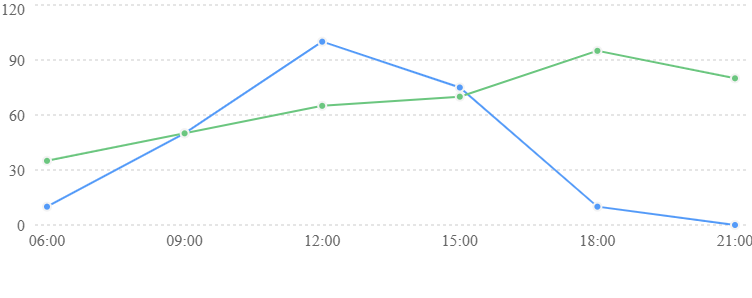
■ Solar output
■ Electricity demand
Illustrative index only; not actual Indian grid data.
This mismatch can create four consequences:
Price volatility: Surplus generation may depress prices at midday, while evening scarcity raises prices.
Imbalance exposure: Generators and buyers may deviate from their scheduled quantities.
Curtailment: Electricity may be unavailable for sale because transmission capacity or system flexibility is insufficient.
Investment uncertainty: Revenue projections based on annual averages may fail to reflect the actual value of electricity during individual delivery intervals.
Recent reporting illustrates the continuing relevance of the infrastructure problem in India: renewable generation can expand faster than transmission capacity, causing curtailment and lost revenue.
Reuters
+1
7. Legal tests for resolving desynchronization disputes
A court or regulator can approach a dispute through the following framework.
Step 1: Identify the relevant time interval
Establish the contractual delivery period, actual generation or consumption interval, scheduling window, metering interval, and settlement period.
Step 2: Identify the controlling legal instrument
Examine the power purchase agreement, grid code, market regulations, dispatch instructions, and applicable tariff orders.
Step 3: Establish causation
Determine whether the mismatch resulted from forecasting error, equipment failure, network congestion, dispatch instructions, regulatory delay, or a counterparty's breach.
Step 4: Determine liability and remedy
Apply the governing rules to decide whether the appropriate remedy is imbalance settlement, contractual damages, tariff adjustment, restitution, regulatory enforcement, or no relief.
8. Practical hypothetical: delayed transmission access for a solar plant
Suppose a 100 MW solar plant is ready for commercial operation, but the transmission line needed to evacuate its electricity becomes operational six months later than planned.
The generator alleges that it lost revenue during the delay. The transmission licensee argues that the delay arose from circumstances outside its control.
The relevant legal analysis would include:
Whether the transmission licensee had a binding obligation to complete the line by a specified date.
Whether the generator satisfied the conditions for connectivity and commissioning.
Whether the delay was excused under the applicable agreement or law.
Whether alternative evacuation arrangements were reasonably available.
Whether the claimed losses are supported by evidence of expected generation, actual market prices, contractual tariffs, and mitigation efforts.
Whether the governing instrument provides compensation, liquidated damages, extension of time, or another remedy.
The key point is that temporal desynchronization describes the underlying mismatch, but liability follows from the applicable legal duty, causation, and contractual or statutory remedy.
9. Reform proposals
Effective reform should coordinate the timelines of physical infrastructure, market operation, contracts, and regulatory oversight.
| Reform | Expected legal and economic benefit |
|---|---|
| Shorter, appropriately designed settlement intervals | Better alignment between actual system conditions and financial settlement. |
| Improved renewable generation forecasting | Fewer avoidable scheduling deviations. |
| Coordinated generation and transmission planning | Less curtailment caused by delayed grid access. |
| Clear contractual provisions on curtailment and delay | Greater predictability in allocating financial risk. |
| Transparent dispatch and metering records | Better evidence for disputes and regulatory supervision. |
| Flexible demand and energy storage | Greater ability to shift surplus electricity to periods of higher demand. |
| Timely regulatory decisions | Reduced uncertainty when market rules and infrastructure evolve. |
These reforms must preserve grid security, affordability, non-discriminatory market access, and the legitimate expectations created by existing contracts.
10. Conclusion
Temporal desynchronization in energy markets is best understood as a coordination problem with contractual, regulatory, technical, and economic dimensions. It arises when the timing of generation, consumption, delivery, market pricing, infrastructure availability, and legal decision-making does not align.
The cited cases demonstrate different aspects of the problem: Energy Watchdog addresses contractual risk and changes in circumstances; the renewable-energy curtailment proceedings address grid access and must-run obligations; and the European balancing cases address cross-border coordination and regulatory authority.
For legal research in India, the most productive approach is to combine the Electricity Act, 2003, the applicable CERC or SERC regulations, the relevant power purchase agreement, and fact-specific judicial decisions. The concept of temporal desynchronization helps organize these issues, but it should not be presented as a standalone cause of action unless a particular legal instrument expressly establishes such a doctrine.
This is a general academic explanation, not a case-specific legal opinion. For litigation or a formal research paper, verify the complete judgments and the currently applicable regulations before relying on a proposition as binding law.
RELATED Blog



comments