


Osha Corporate Compliance.
OSHA Corporate Compliance


4
1. Introduction to OSHA Compliance
OSHA Corporate Compliance refers to adherence by companies to workplace safety and health regulations established under the Occupational Safety and Health Act of 1970, enforced by the Occupational Safety and Health Administration.
The primary objective is to ensure safe and healthy working conditions by imposing duties on employers to prevent workplace hazards, injuries, and fatalities.
2. Core Legal Obligations of Corporations
(a) General Duty Clause
Under Section 5(a)(1) of the OSHA Act, employers must provide a workplace free from recognized hazards likely to cause death or serious harm.
(b) Compliance with Specific Standards
Corporations must follow OSHA regulations relating to:
- Hazard communication (chemical safety)
- Machine guarding
- Electrical safety
- Fall protection
- Personal Protective Equipment (PPE)
(c) Recordkeeping and Reporting
Employers must:
- Maintain injury/illness logs (OSHA 300 forms)
- Report fatalities within 8 hours
- Report serious injuries within 24 hours
(d) Training and Communication
Employers must:
- Train employees about hazards
- Provide instructions in a language understood by workers
- Display OSHA posters informing employees of rights
(e) Inspection and Cooperation
Corporations must:
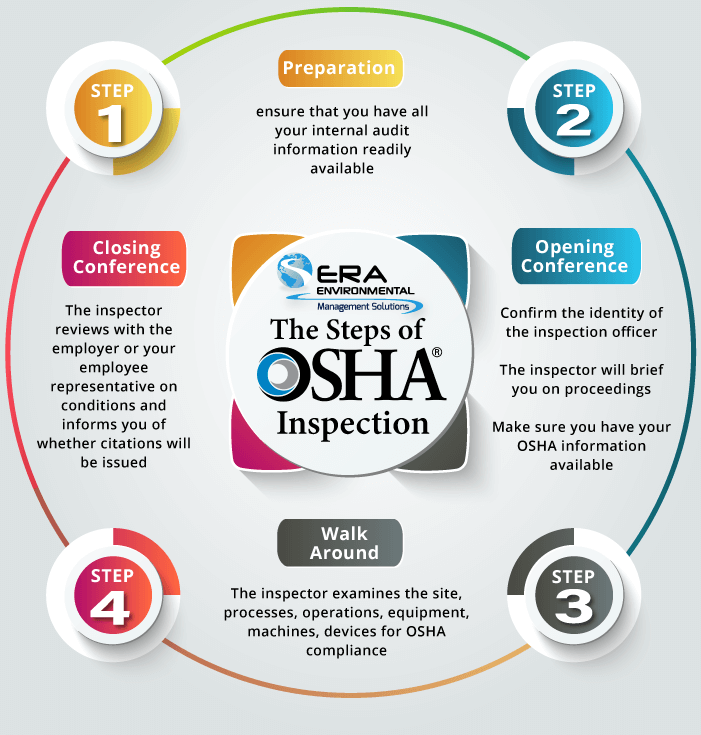
- Allow OSHA inspections
- Avoid obstruction of inspectors
- Rectify violations within prescribed timelines
3. Corporate Governance and OSHA
OSHA compliance is increasingly viewed as part of corporate governance and ESG frameworks. Boards and senior management must:
- Implement safety compliance systems
- Conduct internal audits
- Ensure whistleblower protection
- Integrate safety into risk management
Failure may result in:
- Civil penalties
- Criminal liability (in cases of willful violations causing death)
- Reputational damage
4. Types of OSHA Violations
| Type of Violation | Description |
|---|---|
| Willful | Intentional disregard of OSHA rules |
| Serious | Likely to cause death/serious harm |
| Other-than-serious | Lesser safety risks |
| Repeated | Same violation reoccurs |
| Failure to abate | Not correcting violation in time |
5. At Least 6 Important Case Laws
1. Secretary of Labor v. National Realty and Construction Co.
- Established interpretation of the General Duty Clause
- Held that employers must eliminate preventable hazards, not guarantee absolute safety
2. Whirlpool Corp. v. Marshall
- Recognized employees’ right to refuse dangerous work
- Reinforced OSHA’s role in protecting worker safety
3. Atlas Roofing Co. v. OSHA
- Upheld constitutionality of OSHA administrative enforcement
- Confirmed OSHA penalties can be imposed without jury trials
4. Brennan v. OSHRC (Hanovia Lamp Division)
- Clarified that employers must implement feasible safety measures
- Established feasibility as a key compliance benchmark
5. Secretary of Labor v. General Dynamics Corp.
- Emphasized corporate responsibility for workplace conditions
- Rejected defense based on lack of knowledge when hazards were obvious
6. Reich v. Trinity Industries Inc.
- Confirmed employer liability even when employees contribute to unsafe conduct
- Reinforced employer duty to enforce safety rules
7. Chao v. Mallard Bay Drilling Inc.
- Extended OSHA jurisdiction in complex industrial contexts
- Highlighted applicability across diverse industries
6. Enforcement Mechanism
OSHA enforces compliance through:
- Inspections
- Triggered by complaints, accidents, or high-risk industries
- Citations and Penalties
- Monetary fines based on severity
- Enhanced penalties for repeated/willful violations
- Abatement Orders
- Mandatory correction of hazards
- Criminal Proceedings
- For willful violations causing death
7. OSHA Compliance Programs in Corporations
Effective corporate compliance systems include:
- Safety Management Systems (SMS)
- Internal Compliance Audits
- Incident Reporting Mechanisms
- Employee Safety Committees
- Continuous Training Programs
Many corporations adopt standards aligned with global frameworks like ISO 45001 (Occupational Health & Safety Management).
8. Defenses Available to Corporations
Corporations may defend OSHA violations by proving:
- Unpreventable Employee Misconduct
- Impossibility of Compliance
- Lack of Employer Knowledge (with due diligence)
- Greater Hazard Defense (compliance would create more danger)
9. Modern Trends and Challenges
- Integration with ESG compliance
- Use of AI and IoT for workplace safety monitoring
- Increased focus on mental health and ergonomic risks
- Stronger whistleblower protections
10. Conclusion
OSHA Corporate Compliance is not merely a regulatory obligation but a strategic governance function. Judicial interpretations through case law have clarified that employers must take proactive, feasible, and enforceable steps to ensure workplace safety.
Non-compliance exposes corporations to legal, financial, and reputational risks, while effective compliance enhances productivity, employee trust, and sustainability.
RELATED Blog

comments